ALANYA HOME JOURNAL
Air Conditioning, Curtains and Furniture Layout in Alanya: A Summer Comfort Plan
Plan air flow, strong sun, curtain layers and furniture placement together for a more balanced, easy-care summer interior in Alanya.
Record sun and air flow room by room
A south-west room and a north-facing room in the same Alanya apartment do not heat up in the same way. Note which windows receive direct morning or afternoon sun, when balcony doors are opened and how conditioned air travels through each room. Decisions based only on floor area can create an overheated window zone, a still corner or a seat that feels constantly cold. Plot windows, doors, the indoor unit, ceiling height and fixed furniture on a measured plan so curtain and furniture choices respond to real conditions.
Move seating and beds out of the direct air stream
Do not block the front of an indoor unit with decorative shelving, tall cabinetry or dense curtains. Equally, avoid directing a continuous close air stream at someone sitting on a sofa or sleeping in bed. Adjustable vanes help, but should not carry the whole layout decision; test sofa depth, headboard position and desk location together. Keep the maintenance cover and filters accessible. Check any later wardrobe or curtain pelmet against installation dimensions before it restricts the service area.
Separate curtain layers by function
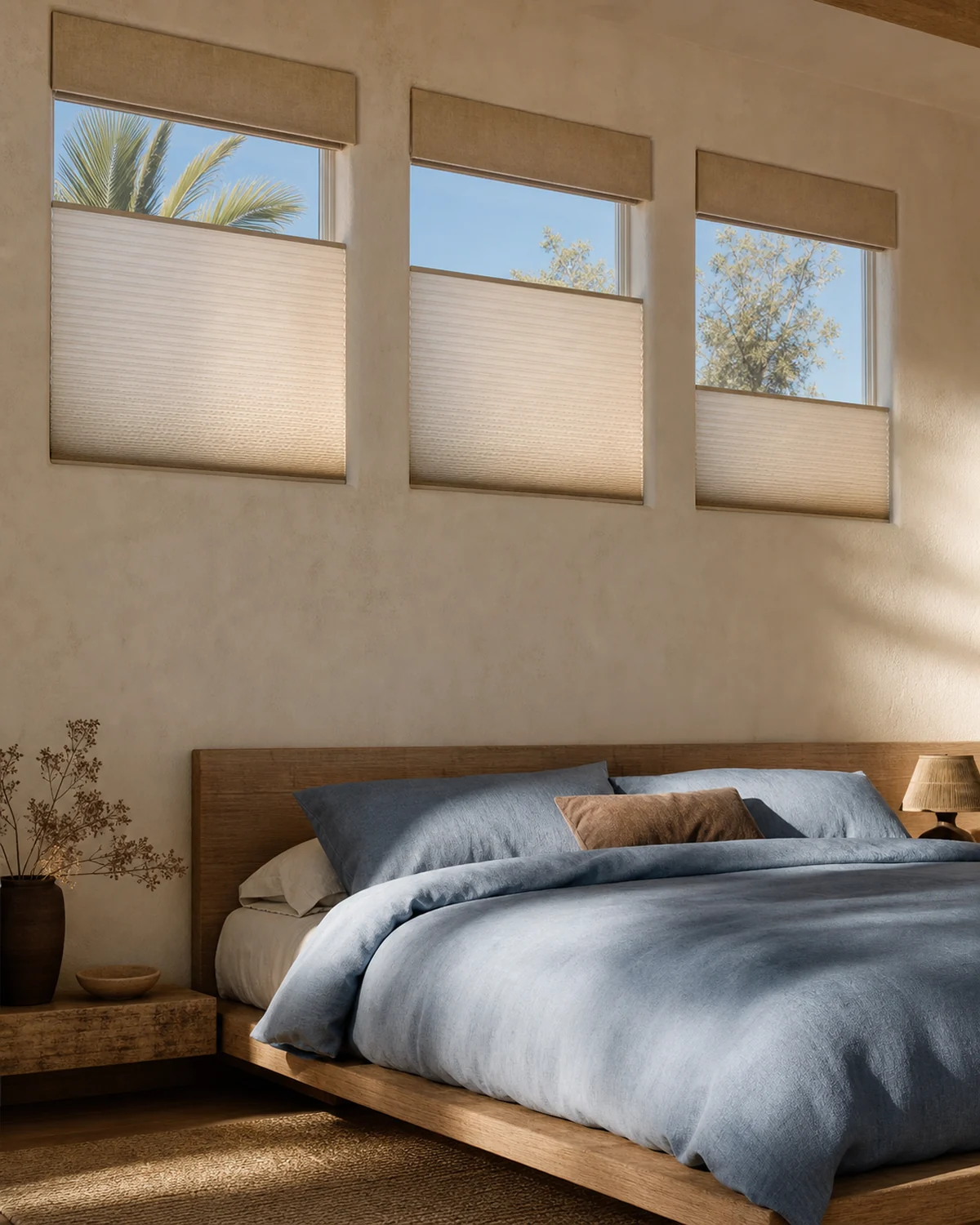
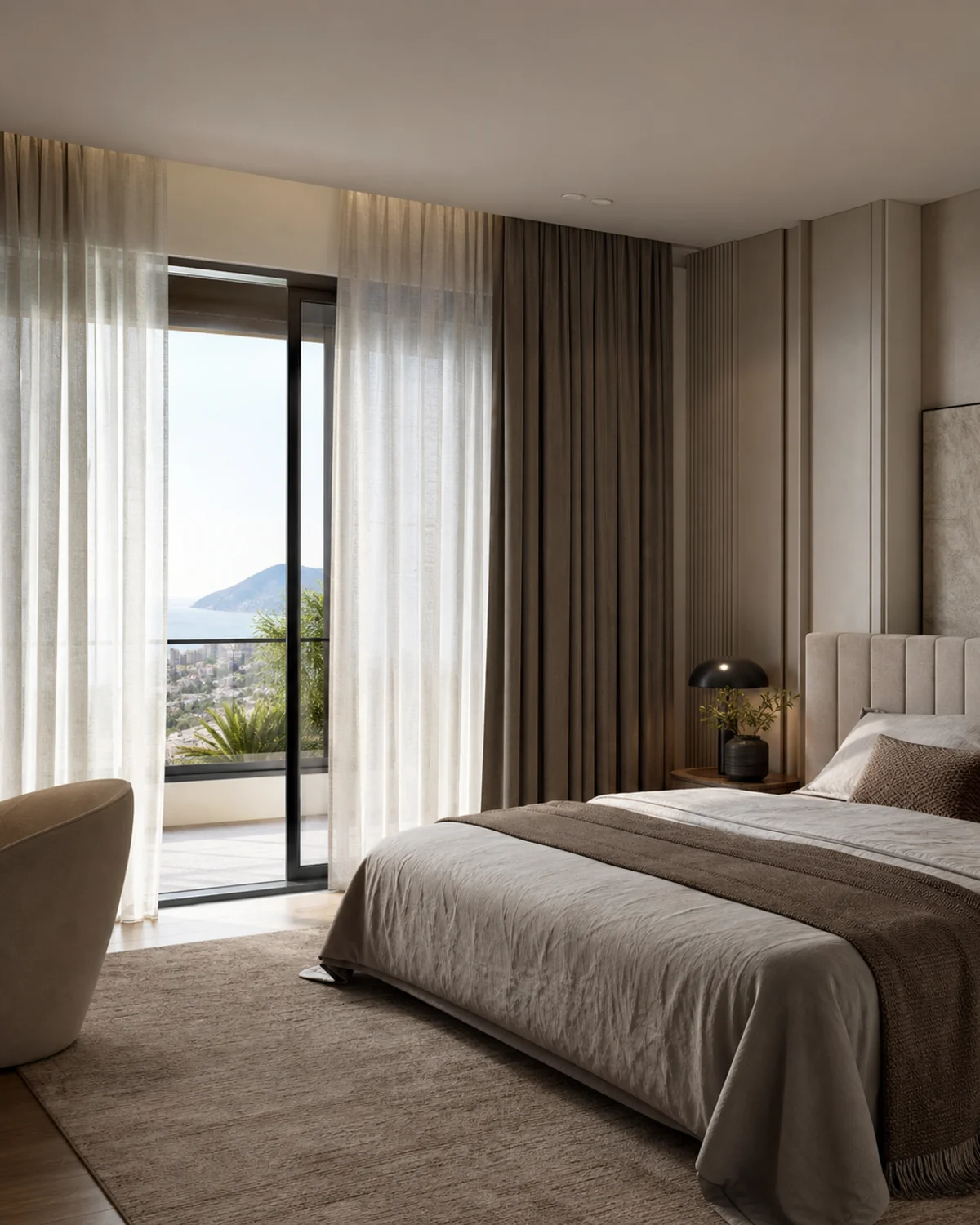
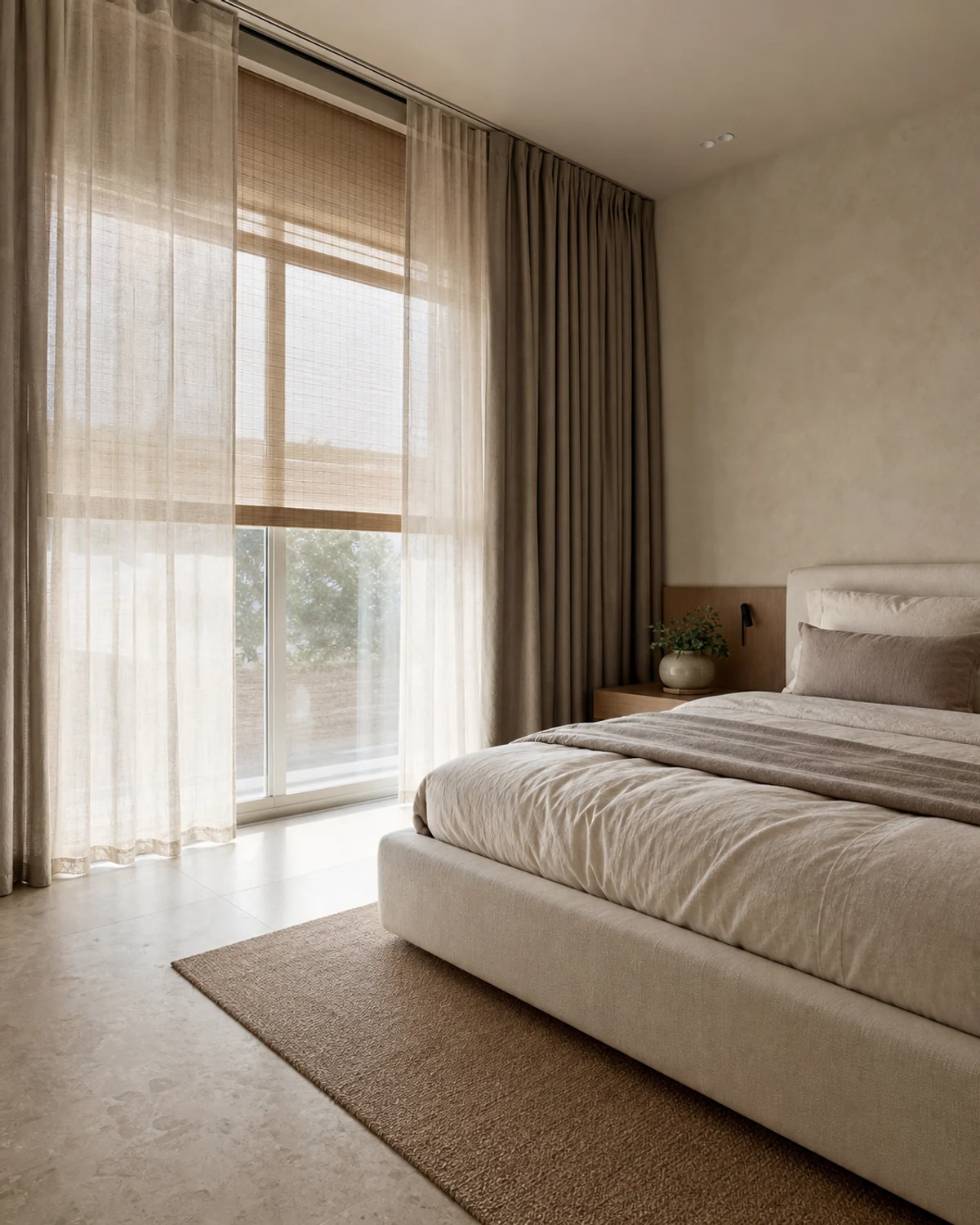
One heavy curtain rarely manages daylight, glare, privacy and sleeping darkness equally well at every hour. In sunny Alanya rooms, a suitable woven solar blind, a light sheer and a separate blackout layer provide more flexible control when they move independently. Test whether a sheer is drawn toward the air outlet, a long curtain covers a grille or the track conflicts with an opening balcony door. For recessed ceiling tracks, resolve motors, rails, window handles and maintenance access using finished-ceiling dimensions.
Choose surfaces for the way the home is cooled
A home kept closed and conditioned throughout summer behaves differently from one that opens frequently to the balcony. Wipeable or removable covers, easy-clean low-pile rugs and fabrics rated for their exposure to strong daylight reduce routine care. If you see a leaking condensate line, a wall mark or a persistently damp surface, investigate the source instead of hiding it with fabric. Light colours alone do not solve heat; durability, cleaning method and distance from the window matter as much as tone.
Create separate daytime and night-time scenarios
A living room may need glare control by day, while a bedroom needs darkness, low air speed and quiet at night. Write simple use scenarios instead of operating air conditioning, curtains and lighting in one fixed arrangement. A solar blind can lower on an afternoon window while the sheer preserves light; at dinner, the outlet can direct air toward open circulation rather than the table. Include occasional air movement and curtain checks for guest rooms or homes that remain closed for long periods.
Test the finished room in real use
The project is not complete until furniture, curtains and cooling operate together. Sit in the room during the hottest hours and check curtain movement, television glare, shadows on work surfaces and where the air stream reaches. Open balcony doors and cabinet fronts and run the robot-vacuum route to reveal conflicts. Record access for filter and curtain cleaning, cable and socket safety, and any fabric touching an outlet. A small change to direction, track position or furniture placement can improve daily comfort more than a major decorative change.
Compare suitable options for your home
Describe your needs once and let us collect suitable options from local companies.
Create a free request →